
The Gambia Joins Global Push to Restrain UN Security Council Vetoes in Cases of Mass Atrocities
Drawing on its own historical transition from dictatorship to democracy, The Gambia has officially joined a international coalition advocating for limits on the United Nations Security Council’s veto power during humanitarian crises.
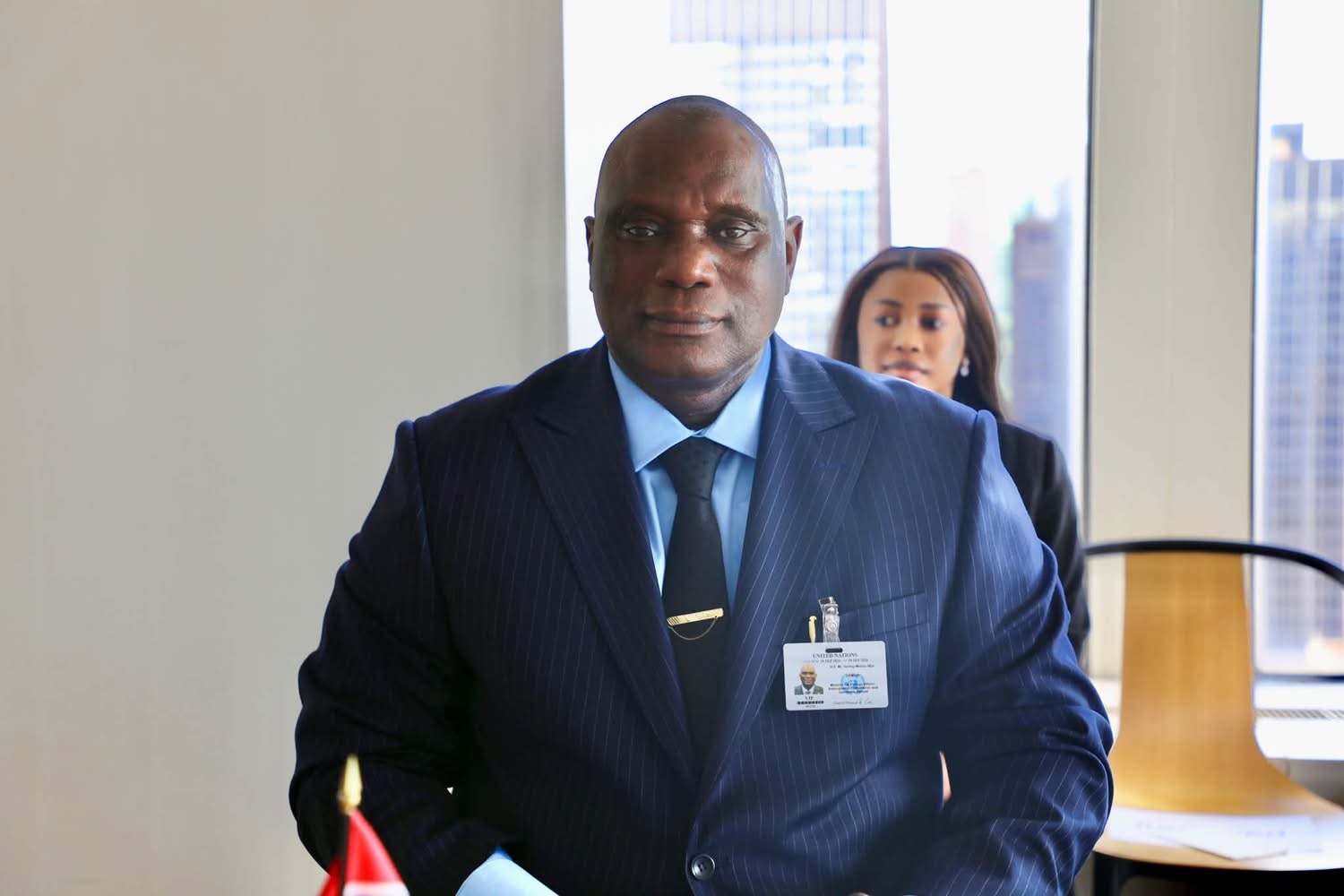
On September 21, 2026, on the sidelines of the 81st Session of the UN General Assembly (UNGA81),The Gambia’s Minister of Foreign Affairs, International Cooperation and Gambians Abroad, H.E. Sering Modou Njie, delivered an official address at a high-level ministerial gathering hosted at the Permanent Mission of France in New York.
Co-hosted by the foreign ministers of France and Mexico, the meeting focused on the long-standing Initiative to Restrain the Veto in Cases of Mass Atrocities. The diplomatic proposal calls on the five permanent members of the UN Security Council—China, France, Russia, the United Kingdom, and the United States—to voluntarily refrain from using their veto power when the Council must act to prevent or stop genocide, crimes against humanity, and war crimes.
Addressing delegates, Foreign Minister Njie commended France and Mexico for maintaining political momentum on the issue. He formally confirmed The Gambia’s endorsement of the Declaration as a voluntary political commitment, emphasizing that the decision aligns directly with the nation's core principles.
A Decision Rooted in Domestic Experience
Minister Njie highlighted that The Gambia’s endorsement is not merely a diplomatic gesture, but a stance deeply rooted in the country’s modern history. Having undergone a painstaking national journey from authoritarian repression to transitional justice and democratic accountability following the end of Yahya Jammeh's regime in 2017, The Gambia has increasingly positioned itself on the global stage as a champion for international law and human rights.
"The Gambia's support is grounded in our national commitment to justice, accountability, human dignity, and the prevention of atrocity crimes," Minister Njie noted, pointing to the country's own path toward justice as a key driver of its foreign policy.”